Printable Budget Templates: Plan, Track, and Master Your Money
Modern budgeting apps were supposed to save our financial lives, but most of the time they just feel like high-tech guilt generators. You download an app with visions of financial freedom, spend three hours fighting two-factor authentication to connect your bank accounts, and within forty-eight hours, it’s firing off passive-aggressive notifications at 2:00 AM because you dared to buy a $5 iced coffee. To add insult to injury, half of those “free” tracking apps eventually lock your data behind a $9.99 monthly subscription just to tell you that you’re spending too much money.
Between forgotten passwords, broken bank syncs, and the sheer existential dread of opening a screen crammed with bright red warning icons, digital fatigue is real.
[ Download PDF ] | [ Download PNG ]
It’s no wonder so many people throw their hands up, delete the app, and decide that ignoring their bank account balance entirely is a valid wealth management strategy.
Why Pen-and-Paper Financial Planning Works
Financial apps love to gaslight us. You open one to check your balance, and suddenly it’s sending five aggressive push notifications warning that your coffee habit is destroying your retirement plan—right before auto-locking you out because you forgot your password for the third time this week. Using a paper printable budget worksheet is the ultimate passive-aggressive payback to those noisy apps, giving you complete control over your money without the digital guilt trips.
[ Download PDF ] | [ Download PNG ]
Writing down numbers by hand creates a psychological connection that typing on a smartphone screen cannot replicate. Paper templates strip away app notifications, password prompts, and complex menu structures, providing a clean slate for focused financial planning. When you physically write down a number, your brain processes it as a real, tangible choice rather than just an abstract digital swipe.
-
Enhanced Spending Awareness: Pen-and-paper tracking forces you to pause and deliberate over every dollar spent, curbing impulse purchases.
-
Simple Layout Visibility: Keeping a simple layout visible on your desk or stuck to the refrigerator keeps your monthly cash flow top-of-mind throughout the month.
-
Zero Digital Friction: Eliminates log-in fatigue, subscription costs, and sync errors between bank accounts.
Key Components of an Effective Budget Layout
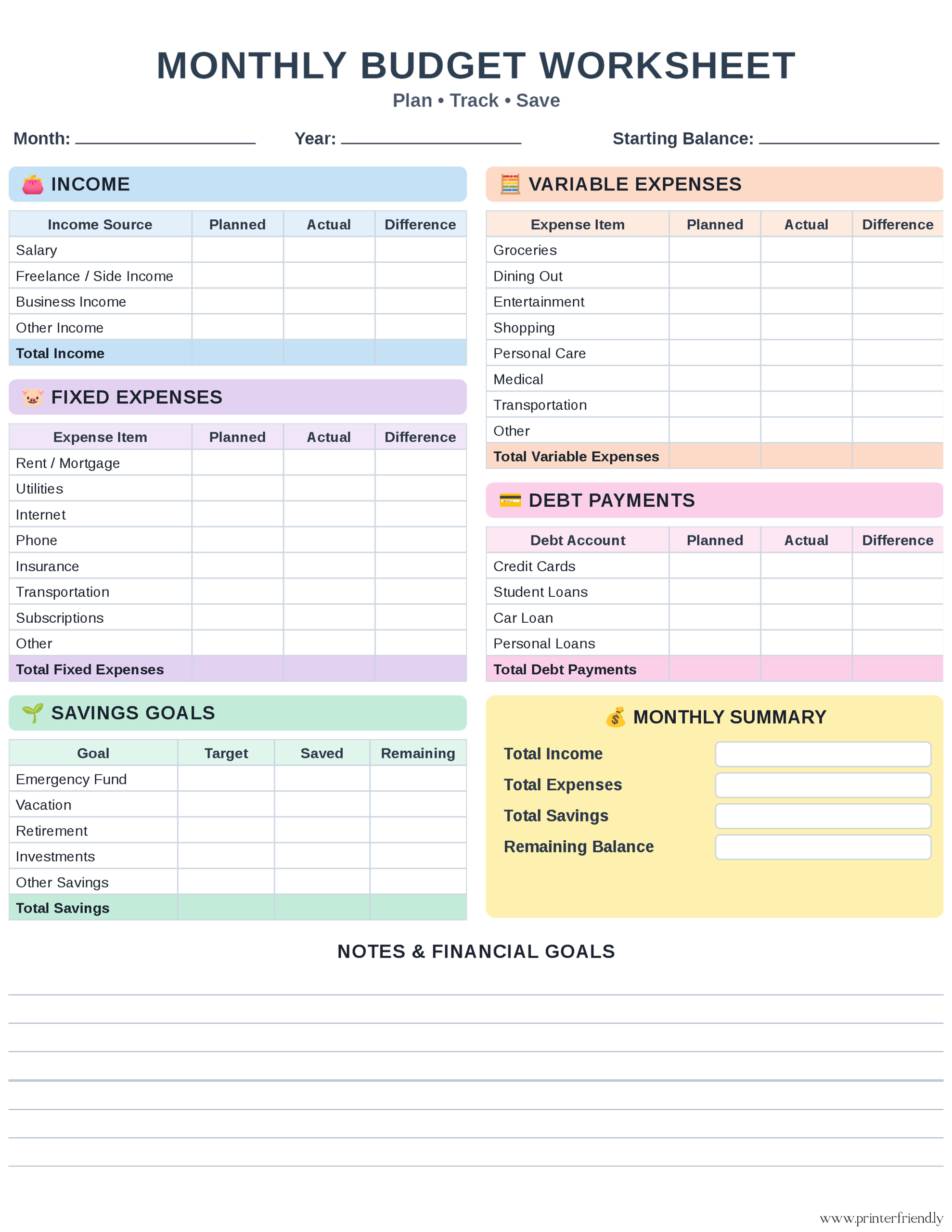
Building a sustainable financial system requires a structured layout that captures every detail of your monthly finances without feeling chaotic. Using our printable budget worksheet gives you a bird’s-eye view of your financial health, ensuring you never face unexpected surprises when bills arrive.
A complete worksheet divides your money into clear categories so you can organize expenses without leaving blind spots.
| Budget Category | Sub-Categories | Purpose |
| Income | Salary, Side Hustle, Freelance | Tracks total cash inflow for the month. |
| Fixed Expenses | Rent / Mortgage, Utilities, Insurance | Covers non-negotiable, recurring bills. |
| Variable Costs | Groceries, Dining Out, Entertainment | Tracks flexible everyday spending. |
| Savings & Debt | Emergency Fund, Debt Payoff | Focuses on long-term wealth and debt reduction. |
| Summary & Totals | Net Income – Total Spent = Remaining | Shows final balance to ensure total financial alignment. |
Income and Fixed Expenses
Your primary section records guaranteed monthly earnings alongside non-negotiable monthly bills. Fixed expenses include predictable costs such as rent or mortgage payments, insurance premiums, and utility baseline estimates.
Variable Costs and Debt Payoff
Flexible spending categories fluctuate from week to week. Grouping variable costs like groceries, transportation, personal care, and dining out allows you to adjust limits before overspending occurs. Dedicated lines for loan balances and credit cards accelerate your debt payoff timeline.
Clean Grid Layout Structure
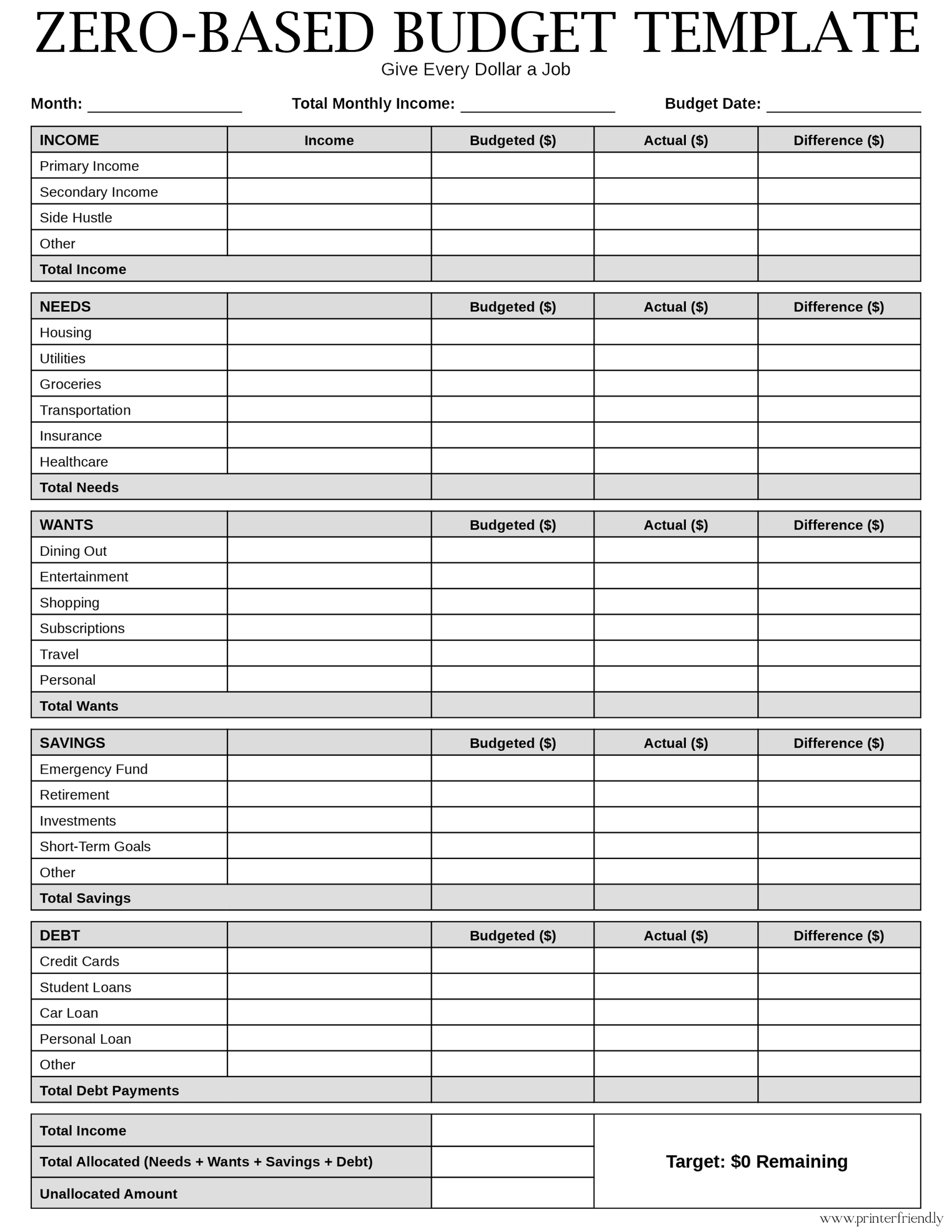
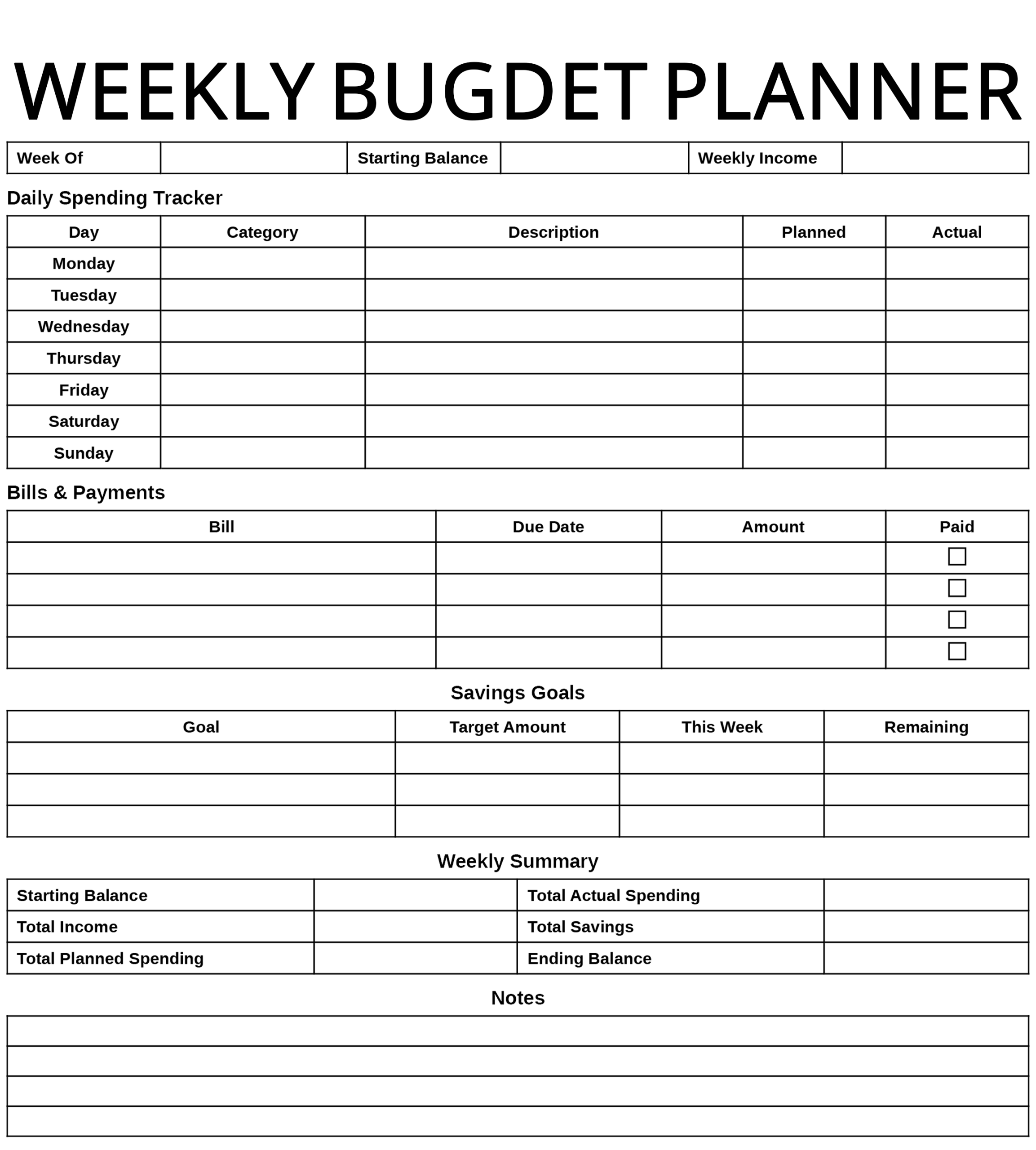
A well-designed grid layout separates numbers into distinct rows and columns, making it easy to calculate net earnings, planned spending, and actual expenses side by side.
[ Download PDF ] | [ Download PNG ]
Step-by-Step: How to Use Your Printable Budget Worksheet
Having a template is only half the battle; knowing how to execute your plan consistently each month turns good intentions into actual wealth. Setting aside just fifteen minutes at the start of every month with your printable budget worksheet creates an actionable roadmap that removes guesswork from your daily spending.
Transforming our fresh downloadable PDF into an active financial roadmap takes under fifteen minutes at the start of each month.
-
Calculate Total Net Income: Record all anticipated household income sources in the top section. Combine base salary, side hustle revenues, and secondary earnings to establish your total monthly limit.
-
Categorize and Allocate Funds: Group expenses into clear buckets. Allocate money to essential fixed bills and emergency savings before assigning funds to discretionary variable spending.
-
Monitor Daily Spending: Store your binder-ready worksheet in a primary planner or clipboard. Log purchases daily into the dedicated columns to compare real-time spending against your starting targets.
-
Reconcile at Month-End: Subtract total actual spending and savings contributions from total earnings to reconcile your worksheet. Use the remaining balance to make adjustments for the following month.
| Category | Planned ($) | Actual ($) | Difference ($) |
| Total Net Income | $4,500 | $4,500 | $0 |
| Fixed Expenses | $2,100 | $2,100 | $0 |
| Variable Costs | $1,200 | $1,350 | -$150 |
| Savings & Debt | $1,200 | $1,050 | -$150 |
Choosing the Right Format for Your System
Everyone manages money differently, meaning the setup that works for your neighbor might feel restrictive to you. Choosing the correct style for your printable budget worksheet ensures that your system fits smoothly into your daily routine, whether you prefer hand-written logs or hybrid digital tools.
Selecting the proper template depends on whether you prefer standard handwritten logging or digital pre-filling.
-
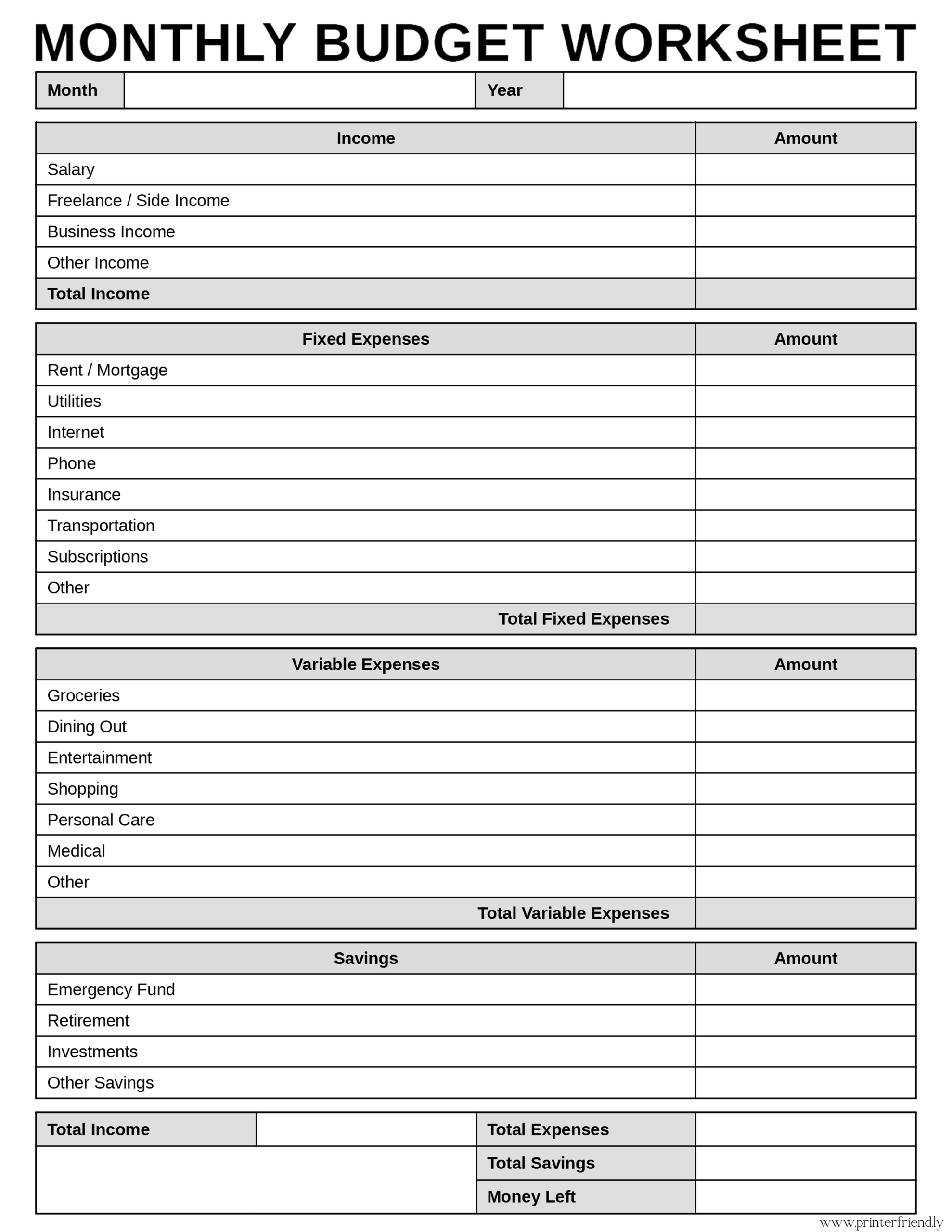
Standard Printable PDF: Perfect for printing out multiple copies to insert into a financial binder. Provides a clean, minimalist sheet for handwritten calculations.
-
Fillable PDF Forms: Allows you to type recurring numbers and fixed income directly on your computer before printing out the customized sheet for manual daily physical tracking.
-
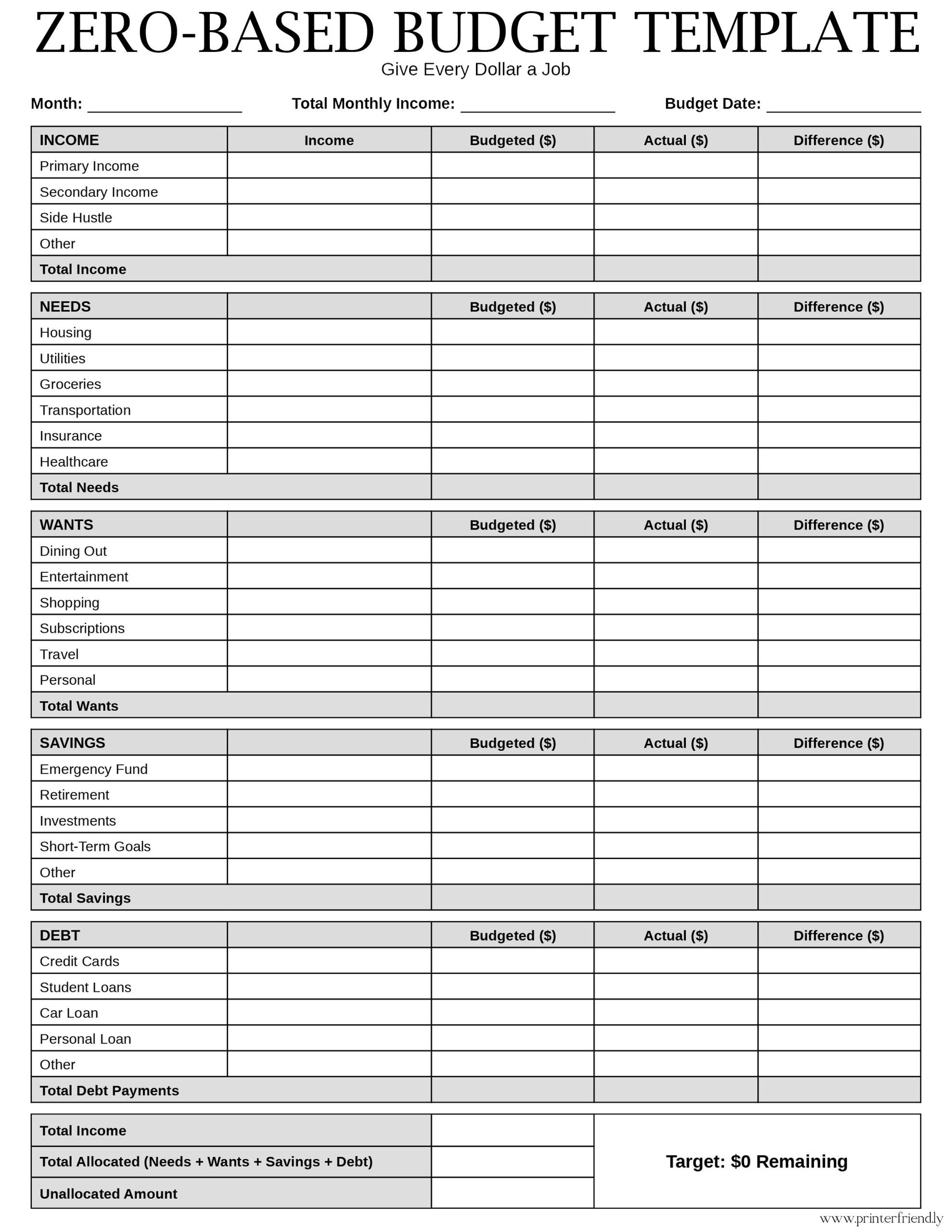
Zero-Based Format: Assigns every incoming dollar a specific job (Needs, Wants, Savings, or Debt) until the remaining unallocated balance equals target $0.
Frequently Asked Questions

[ Download PDF ] | [ Download PNG ]
When transitioning away from automated banking apps, it is natural to have questions about managing everyday scenarios manually. Finding the right workflow for your printable budget worksheet will help you maintain consistency and avoid common budgeting pitfalls.
Is a paper budget worksheet better than a digital spreadsheet?
Paper sheets offer zero digital distractions and higher tactile engagement, making them easier for beginners to stick with long-term.
How do I track irregular income on a printable template?
Base your monthly income projections on your lowest expected monthly earnings. Any excess income earned during the month can then be allocated directly toward savings or accelerated debt payoff.
Where should I store my printed sheets?
Use a standard 3-ring binder with binder-ready hole punches, or keep the current month’s page on a desk clipboard for quick daily updates.
Related Budget Worksheet:
- Printable Wedding Budget Planner and Worksheet Template
- Printable Weekly Budget Template to Track Weekly Expenses
- Free Budget Spreadsheet to Track Your Expenses

I’m a passionate designer with a keen eye for detail and a love for crafting visually stunning experiences. With a strong foundation in design tools like Adobe Photoshop, Illustrator, and Figma, I bring ideas to life through compelling visuals. My proficiency in HTML and CSS allows me to translate designs into functional, responsive websites. I’m always eager to learn and explore new design trends and excited to contribute my skills to innovative projects.