Free Printable Hundreds Chart: 1-100 Math Work Sheets
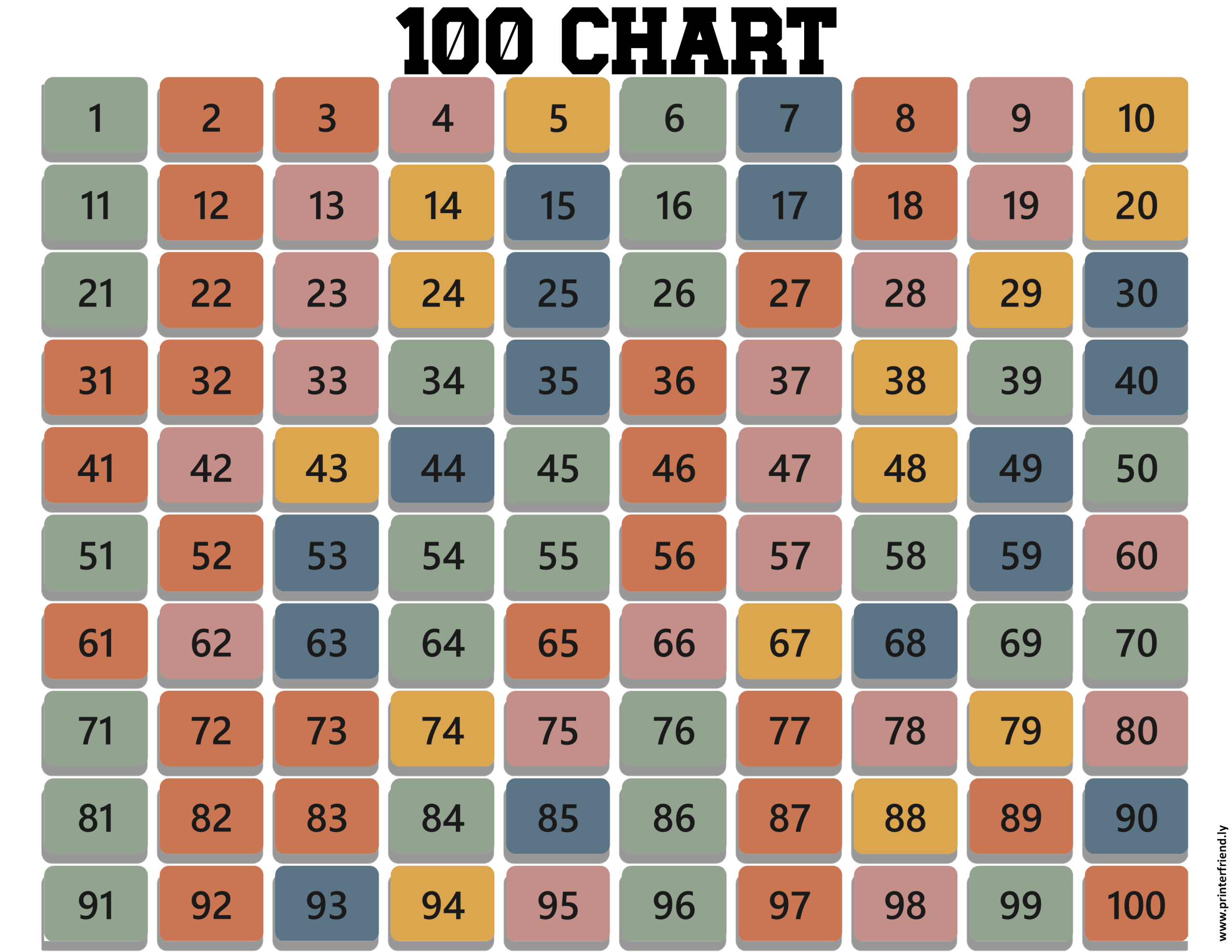
Nothing causes sudden, cold-sweat anxiety quite like opening your second grader’s math folder and realizing you haven’t thought about place value since the late nineties. The good news? Elementary math does not have to feel like a torture device for parents or teachers. Our printable hundreds chart is one of the single most effective tools to instantly demystify early math, transforming abstract, overwhelming numbers into a friendly visual game that kids actually enjoy playing.
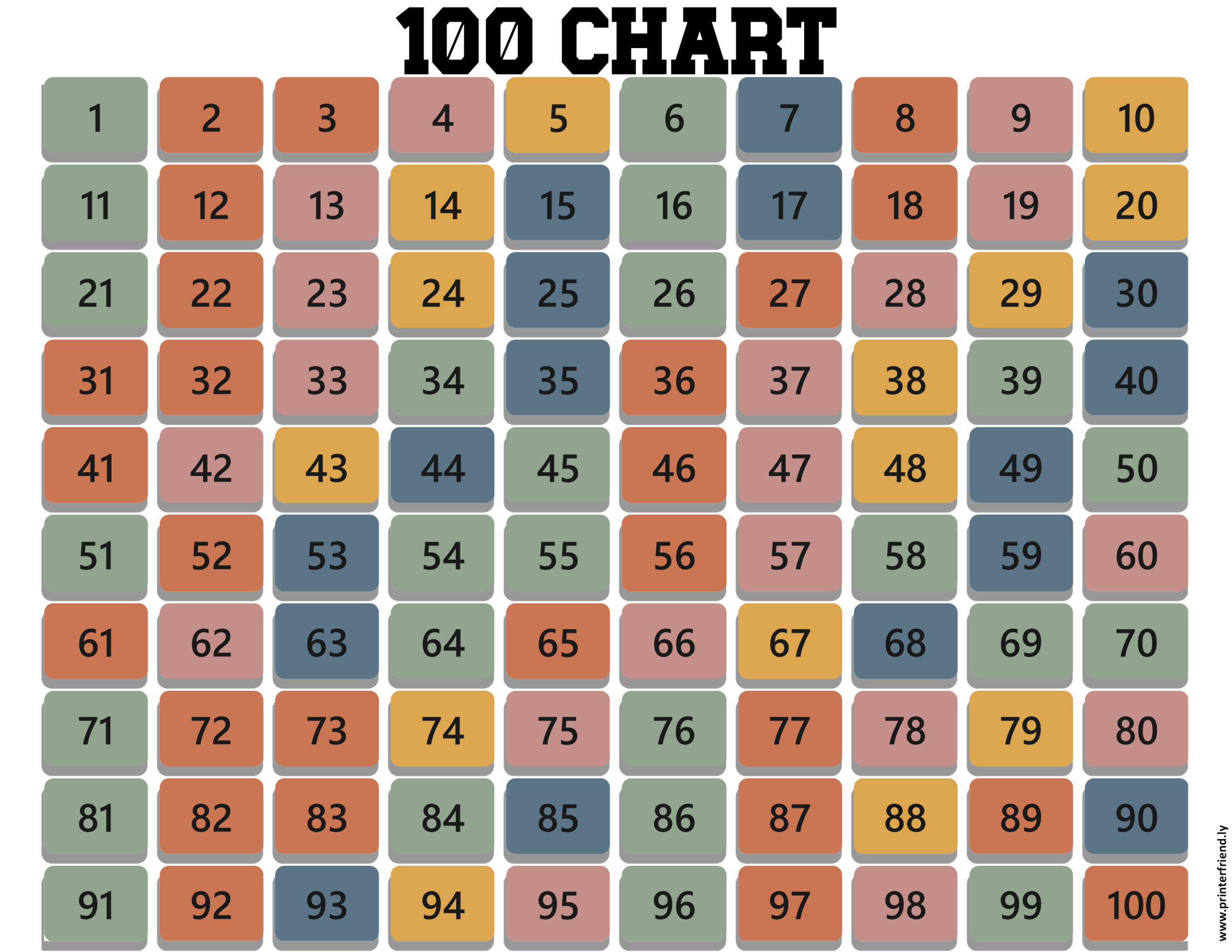
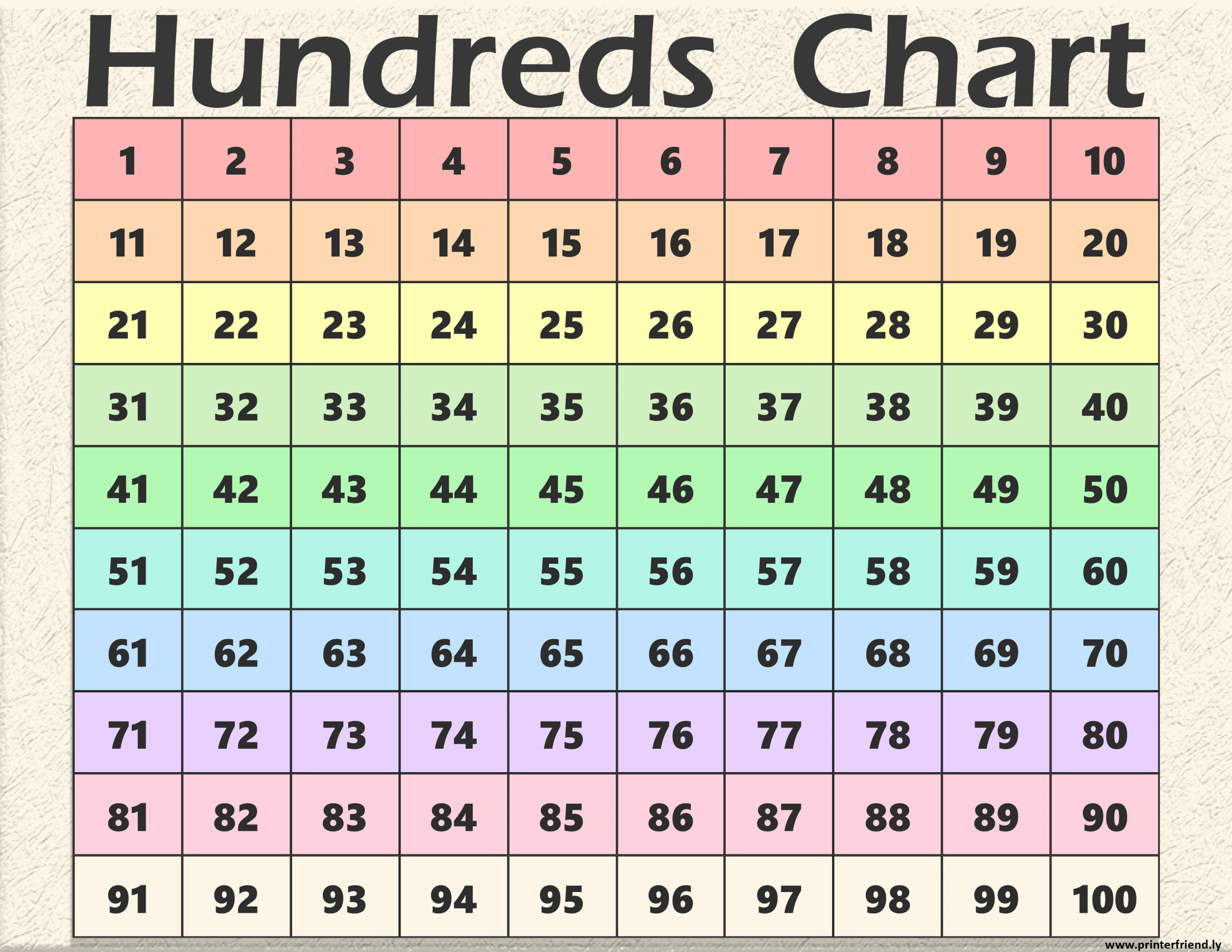
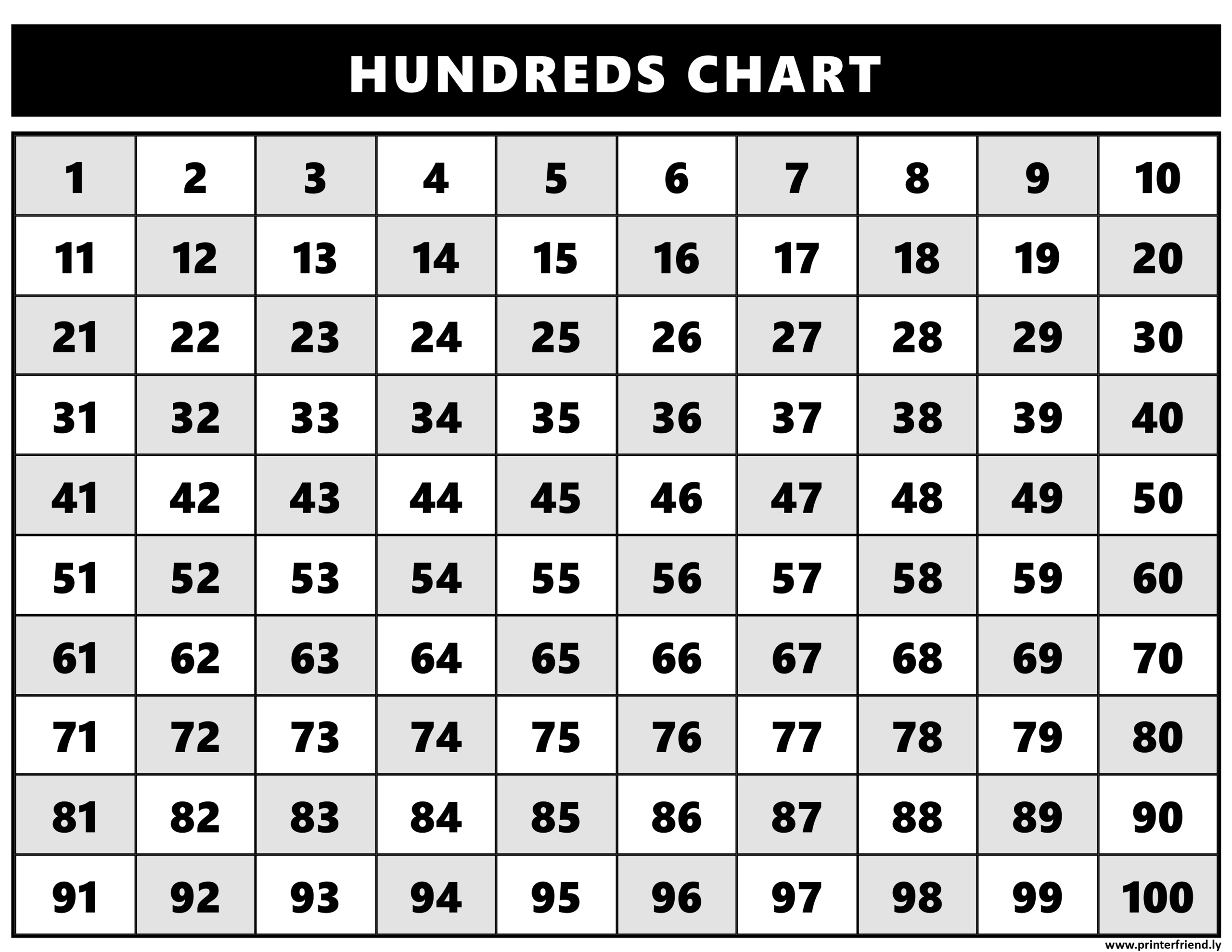
To give you complete flexibility in your classroom or home learning space, we designed three distinct aesthetic styles alongside a versatile practice template. You can choose our Soft Pastel Rainbow format with gentle color-coded rows, our Modern Earthy Tiles design for a calm workspace, or our clean Ink-Saver Black & White layout for quick mass printing. All in PDF and PNG formats for easy download and printing.
[ Download PDF ] | [ Download PNG ]
For maximum durability, print your chosen design onto heavyweight cardstock rather than thin printer paper. If you slide the page into a clear sheet protector or laminate it, your students can use dry-erase markers directly on the board.
What our Hundreds Chart Shows
At first glance, this free printable hundreds chart might look like a simple grid of digits from 1 to 100. However, its true power lies in its structured 10×10 matrix, which serves as a concrete visual representation of our base-ten number system. Instead of viewing numbers as isolated, arbitrary symbols, children can physically see how values grow in predictable, repeating cycles of tens and ones.
When students observe horizontal rows, they unlock key place value rules. As you slide your finger from left to right across any row, the ones digit increases by exactly one with every square (for example: 21, 22, 23, 24). Throughout this entire horizontal move, the tens digit remains completely unchanged until you hit the row’s end, helping kids realize that tens represent stable groups while ones accumulate step by step.
Vertical movement down a column reveals an even more powerful mathematical secret. Moving down one single box keeps the ones digit identical while increasing the tens digit by exactly one ten (+10). For example, looking down the 4s column gives you 4, 14, 24, 34, 44, and so on. This clear visual alignment reinforces the idea that adding ten isn’t a complex calculation, but simply a vertical jump to the next bundle of ten.

[ Download PDF ] | [ Download PNG ]
How to Read this Printable Hundreds Chart
You can teach children to navigate our printable hundreds chart using a simple directional game map. The rules are wonderfully straightforward: moving right adds 1 (+1), moving left subtracts 1 (-1), jumping down one row adds 10 (+10), and jumping up one row subtracts 10 (-10). Once students memorize these four basic directional moves, multi-digit addition and subtraction become intuitive spatial journeys.
Let’s walk through a concrete example using the addition problem 34 + 23. First, have the student place their finger or a clear counter directly on the starting number 34. Since 23 is made of 2 tens and 3 ones, instruct them to make two big vertical jumps straight down the grid (landing on 44, then 54) to quickly add 20.
From 54, the student simply moves right 3 individual squares to account for the 3 ones (55, 56, 57). The final destination is 57, solved efficiently without drawing tick marks or counting on fingers. You can even show advanced students that moving 3 spaces right first (to 37) and then jumping down 2 rows still lands on 57, visually proving that the order of operations doesn’t change the sum.
This directional technique transforms abstract mental arithmetic into concrete physical movements on the grid. By building a strong visual sequence of tens and ones in their minds, children develop deep computational fluency and the confidence to solve two-digit equations mentally.
Fun Printable Hundreds Chart Worksheets & Counting Games
One of the most effective activities for reinforcing spatial number relationships is the “Grid Cross” puzzle. Take a snippet from our printable hundreds chart shaped like a plus sign, placing a target number like 45 in the center. Students must use their directional grid rules to fill in the four surrounding empty boxes: 44 to the left (-1), 46 to the right (+1), 35 above (-10), and 55 below (+10).
Transforming the chart into a coloring canvas turns pattern recognition into an engaging art lesson. Hand students highlighters or colored pencils and ask them to shade in skip-counting sequences. For instance, coloring multiples of 2 in yellow and multiples of 5 in blue creates striking geometric bands across the board, making even and odd distinctions visually obvious.
Mystery picture activities are another classroom favorite that keeps students intensely focused. You provide a list of short math challenges, such as “Color the box with 3 tens and 7 ones red” or “Color 15 + 10 blue.” As children solve each clue and locate the correct squares on their grid, a hidden picture—like a heart, star, or animal—gradually emerges.
For small group learning, try “Race to 100.” Students take turns rolling a 10-sided die or dot dice, starting at box 1 and moving their game pieces forward according to their roll.
Common Hundreds Chart Mistakes Kids Make (And Quick Fixes)
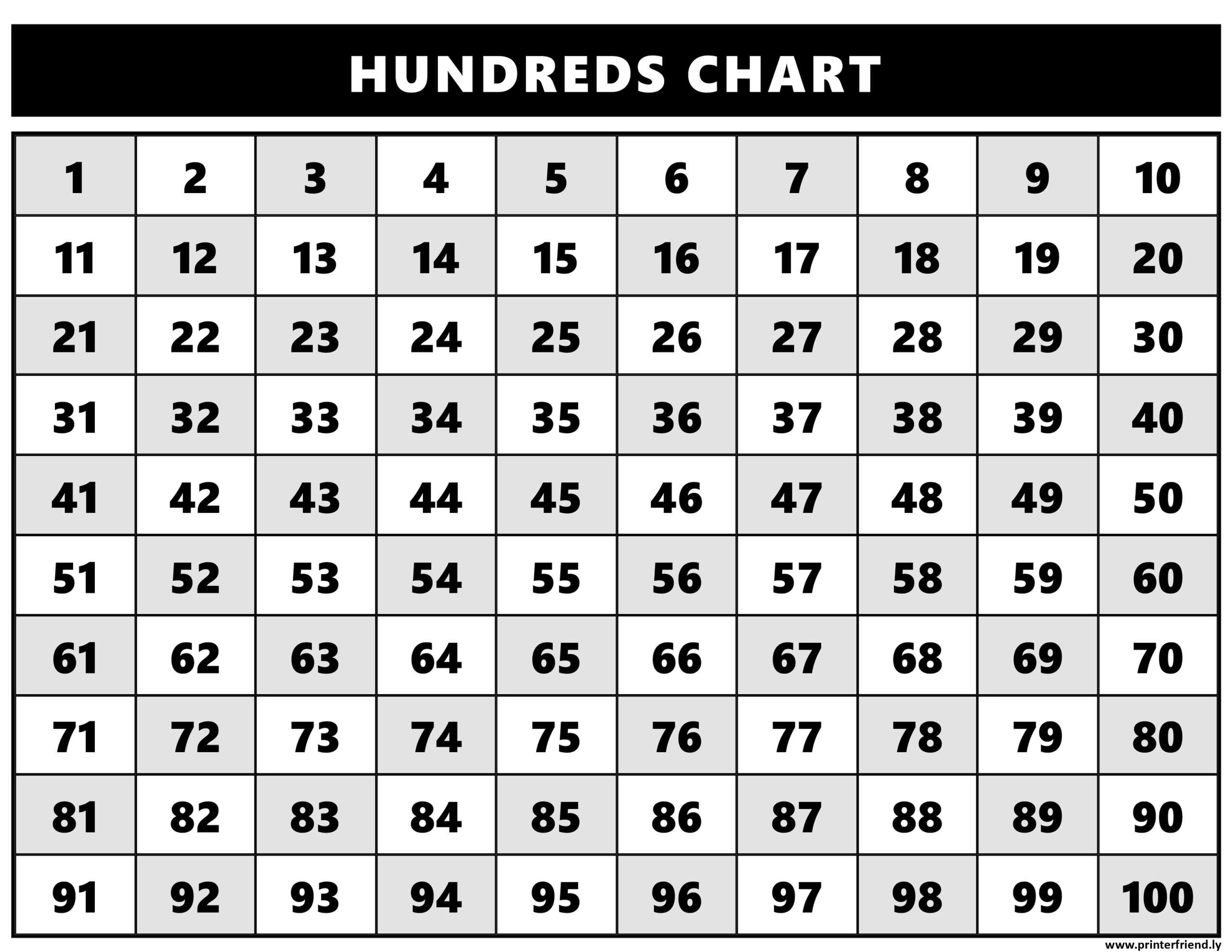
A classic error occurs when students reach the right edge of a row—say, ending at 20—and drop straight down to 30 instead of sweeping back to 21 on their printable hundreds chart. Because they view the right edge as the end of a line, their eyes naturally drop down vertically. To fix this “Row-End Sweep Error,” draw brightly colored curved arrows that sweep from the end of each row back to the beginning of the next line, guiding their eyes smoothly through the sequence.
[ Download PDF ] | [ Download PNG ]
Another frequent hurdle is directional confusion between +1 and +10. Young learners often assume that adding 10 requires taking 10 horizontal steps to the right because 10 feels like a large number. You can fix this misconception by using the “Elevator Analogy”: explain that moving across a row is like taking small sidewalk steps, but moving down a row is like taking an elevator that travels a full story of 10 steps all at once.
Digit reversals—such as confusing 24 with 42—are also very common in early elementary grades. When a child looks for 24, they might accidentally wander into the 40s row because both numbers share the same digits. Teach students a strict two-step search rule: first locate the target tens digit row (the 20s), and then slide horizontally to locate the ones digit column (the 4).
Related Math Charts For Children:
- Free Printable Preschool Worksheets: Alphabet Tracing, Math and Fine Motor Skills
- Printable Preschool Math Worksheets With Answers
- Printable Kindergarten Math Worksheets With Answer Sheets

I’m a passionate designer with a keen eye for detail and a love for crafting visually stunning experiences. With a strong foundation in design tools like Adobe Photoshop, Illustrator, and Figma, I bring ideas to life through compelling visuals. My proficiency in HTML and CSS allows me to translate designs into functional, responsive websites. I’m always eager to learn and explore new design trends and excited to contribute my skills to innovative projects.