
Living or working with nursery-aged children is a daily masterclass in beautiful chaos. Attention spans are measured in minutes, stray crayon strokes frequently find their way onto kitchen tables, and genuine learning occurs in spontaneous, energetic bursts. At three and four years old, children learn best when their natural curiosity is directed into structured, hands-on tasks rather than rigid academic drills.
Thoughtfully designed free printable worksheets for nursery offer a simple bridge between active play and focused skill-building. By providing structured boundaries and clear visual targets, these resources are in PDF format. Help channel a toddler’s enthusiasm into intentional motor and cognitive movements. With the right layout, a single page turns tabletop time into a rich learning moment that requires minimal prep work from parents or educators.
[ Download PDF ] | [ Download PNG ]
Essential Early Learning Skills to Target with Nursery Activity Sheets
From an instructional design perspective, nursery-level learning materials must prioritize foundational physical and visual mechanics over formal academic output. Pushing abstract concepts too early often leads to frustration. Age-appropriate activities strengthen executive functioning, hand strength, and visual tracking. Incorporating high-quality free printable nursery worksheets allows children to build confidence while supporting fundamental Pre-K readiness milestones.
- Fine motor development: Building hand strength through gripping, pinching, and pencil control.
- Alphabet recognition: Familiarizing toddlers with letter shapes and sounds.
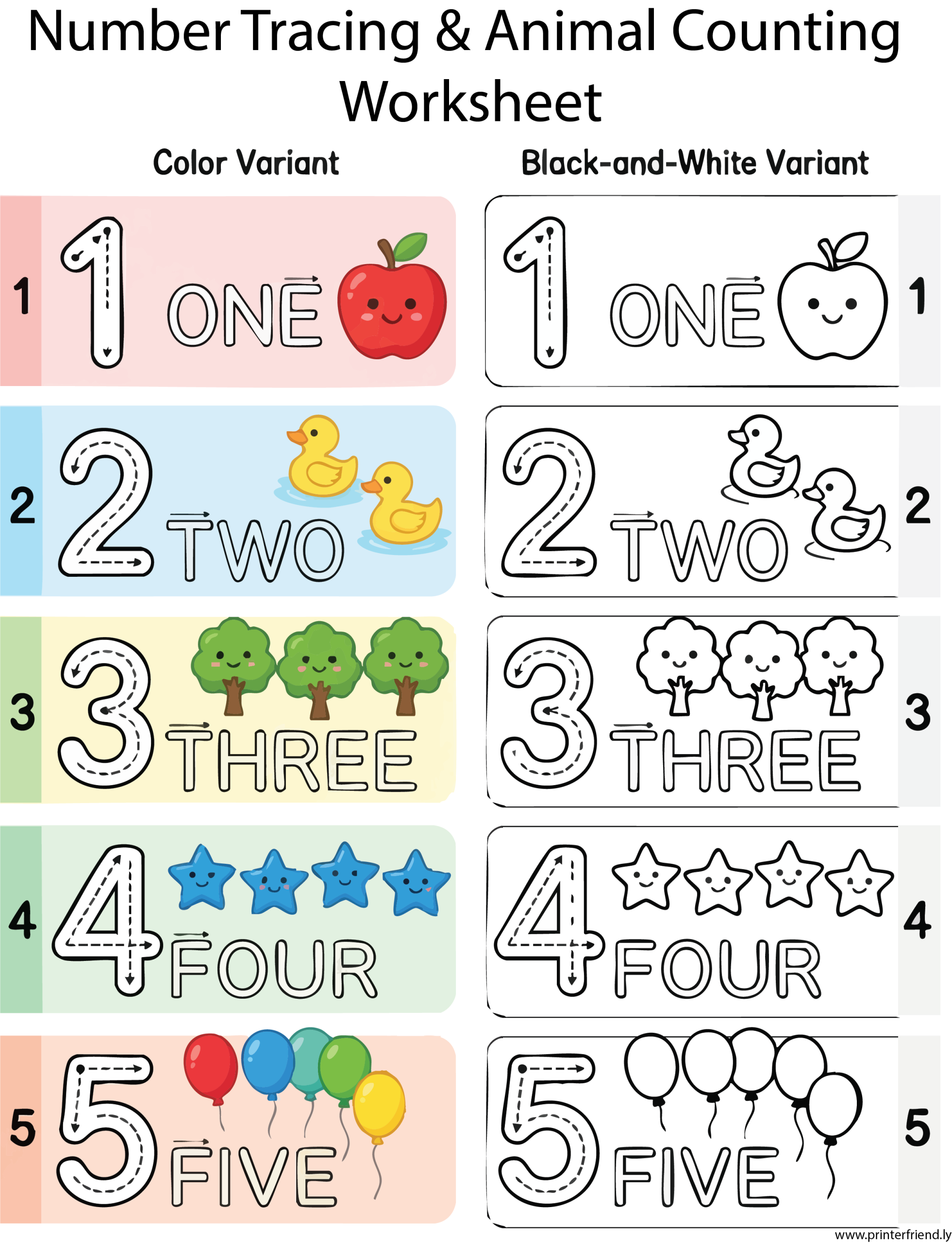
- Counting skills: Basic number awareness and one-to-one object matching.
- Visual perception: Identifying basic shapes, patterns, and differences between objects.
Popular Nursery Printable Formats That Keep Kids Engaged
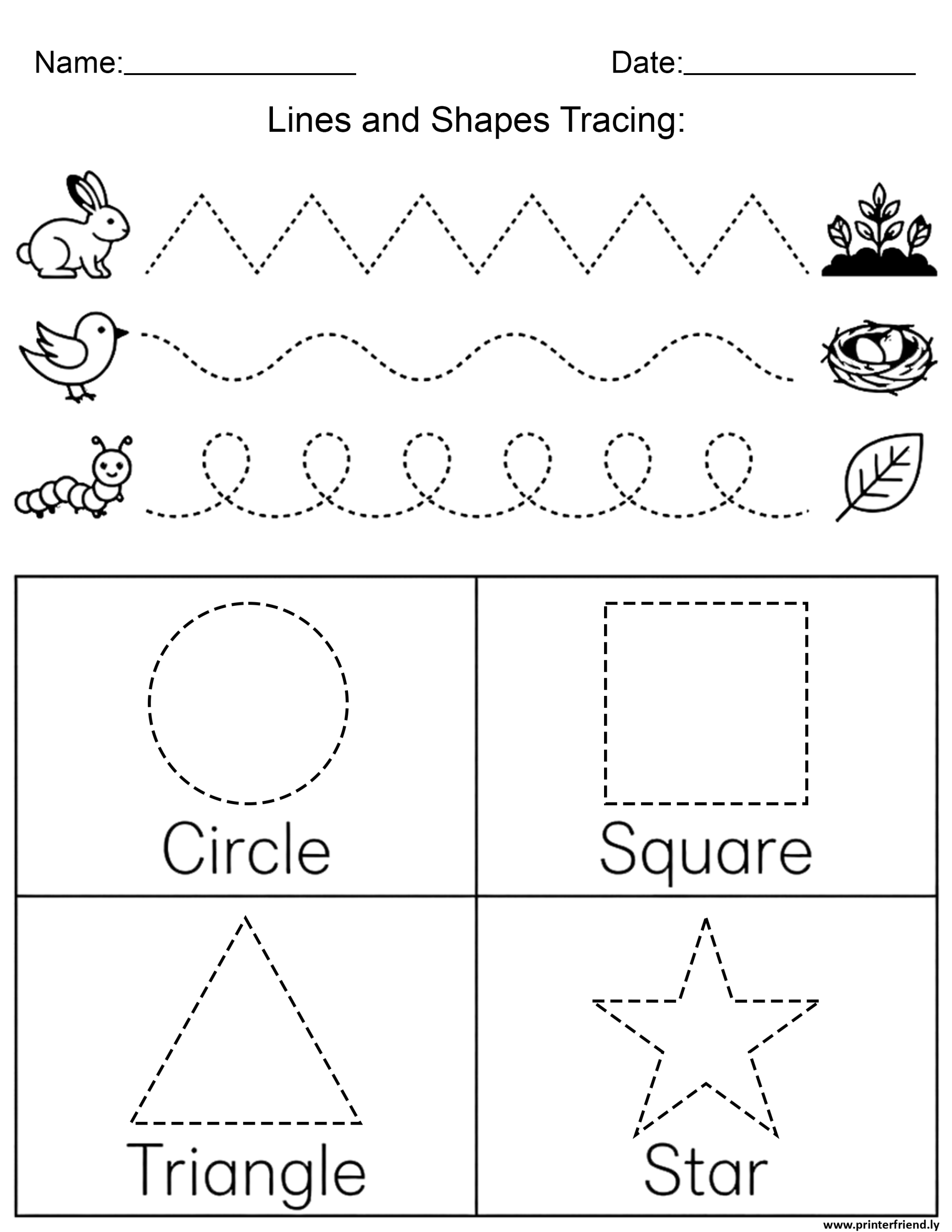
Effective page design balances visual interest with low cognitive load. Early tracing and coloring exercises rely on clear spatial pathways, giving young learners defined boundaries to navigate. When children trace dotted zig-zags, loops, or basic shapes, they are refining hand-eye coordination and learning to control stroke velocity. Incorporating simple illustrations alongside tracing paths gives children an immediate visual reward while reinforcing stroke control. Utilizing varied worksheets for nursery keeps daily lessons fresh and exciting.
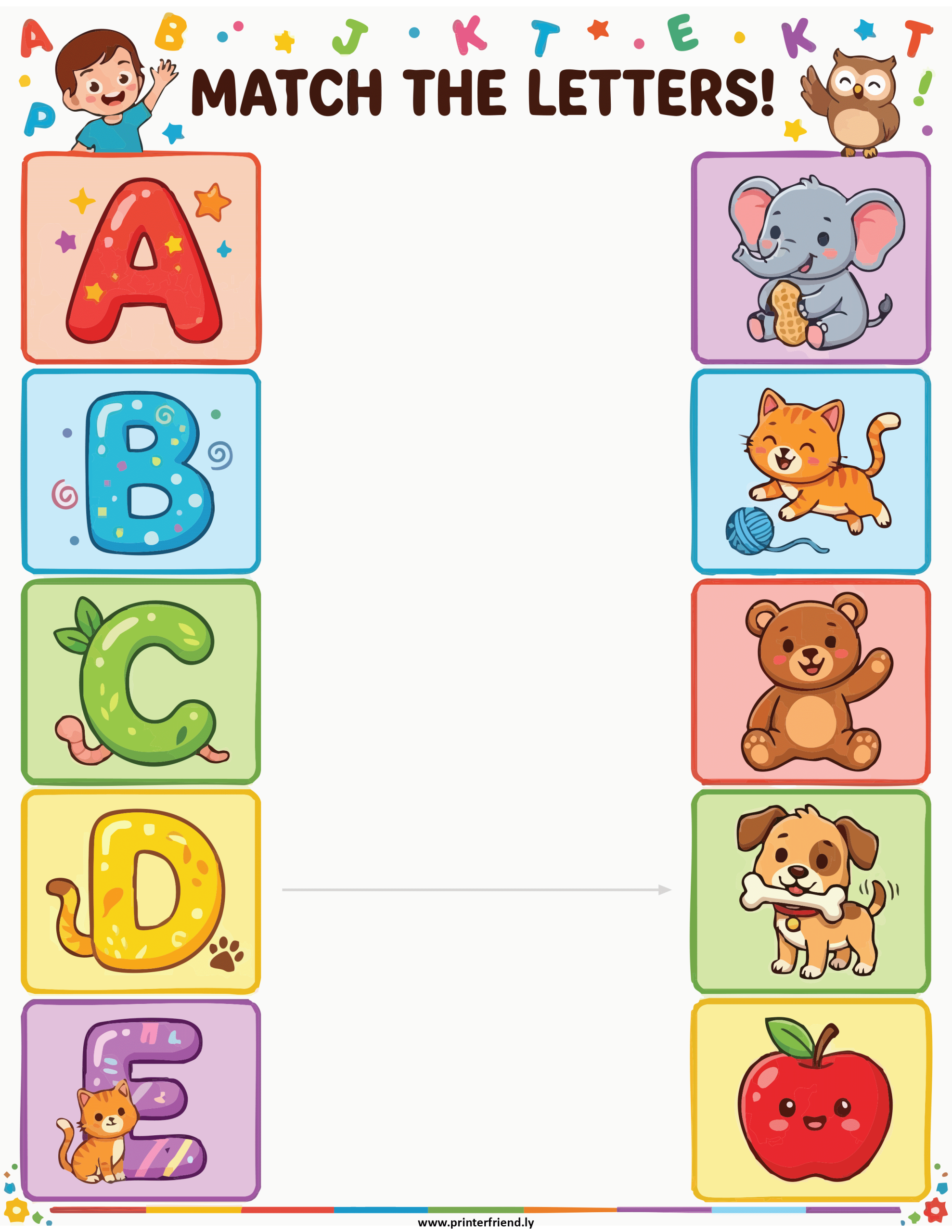
Logic, matching, and tactile sorting tasks engage different neural pathways by asking children to evaluate relationships between objects. Matching uppercase letters to thematic illustrations or sorting objects by size requires visual discrimination and working memory. Alternating between movement-based tracing pages and analytical matching sheets keeps young learners engaged without overstimulating them.
- Line-tracing paths: Straight, curved, and zig-zag lines to guide motor control.
- Color-by-code or free color pages: Combining creativity with instruction following.
- Cut-and-paste activities: Practicing scissor safety and spatial placement.
- Connect-the-dots & matching games: Encouraging problem-solving and visual tracking to identify matching pairs.

[ Download PDF ] | [ Download PNG ]
Practical Tips for Tabletop Learning with Early Learning Activity Pages
Keep session durations short and aligned with early childhood development standards. A structured tabletop activity using our free printable worksheets for nursery should last between 5 and 10 minutes. Forcing longer periods often leads to fatigue and diminished motor control, working against your developmental goals.
Pair paper-based exercises with concrete, three-dimensional objects whenever possible. If a sheet asks a child to count three items, place three physical wooden blocks or small snacks directly onto the paper alongside the illustration. This multi-sensory approach bridges the gap between concrete objects and abstract printed symbols.
Maintain a low-pressure environment where process is celebrated over perfect precision. Stray marks, imperfect lines, and reversed colors are natural steps in a child’s spatial learning journey.
- Work with thick triangular crayons or chunky markers before transitioning to slim pencils to support proper palmar and pincer grasp development.
- Stop the activity while enthusiasm is high, before fatigue or frustration sets in.
- Slide pages into plastic sheet protectors or dry-erase sleeves so children can practice lines repeatedly with markers.
Printing Smart: Tips for Free Nursery Printables
High-quality instructional materials rely on strong contrast, clear vector lines, and uncluttered margins. When preparing free printable worksheets for nursery, classroom, or home use, prioritize high-resolution PDF downloads to prevent pixelated, blurry lines that confuse young eyes. Clean page design with minimal solid dark fills ensures that the core visual focus remains on the learning task itself.
Selecting the right print modes and paper stock preserves both printer ink and paper integrity. Standard 20 lb printer paper often tears under heavy crayon pressure or bleeds through when using liquid glue and washable markers. Stepping up to a slightly heavier paper stock creates a sturdy surface capable of handling enthusiastic toddler handiwork.
- Selecting high-resolution PDF files to ensure crisp, clean lines across all layout elements.
- Printing in greyscale or black-and-white to save colored ink during high-volume classroom preparation.
- Choosing ink-friendly, clean designs with minimal solid background fills and light borders.
- Using heavier paper stock (24 lb to 28 lb) or laminating pages for repeated daily practice.
Grab Your Free Nursery Worksheets and Pre-K Learning Sheets

[ Download PDF ] | [ Download PNG ]
Early childhood education flourishes when learning feels like natural discovery rather than structured work. By focusing on fine motor progression, simple visual layouts, and brief tabletop sessions, you can help young learners build genuine confidence step by step. Providing accessible free printable worksheets for nursery gives caregivers and teachers an effective tool to enrich daily play.
Building a consistent routine around tabletop activities doesn’t require complex lesson plans or expensive supplies. Having a ready collection of printables on hand allows you to instantly transform quiet moments into engaging skill-building sessions whenever your child shows interest. Explore our collection of teacher-approved, ready-to-use pages, select your favorite high-resolution PDF or PNG files, and instantly print your next set of activities today.
Related Worksheets for Children:
- Free Printable Preschool Worksheets: Alphabet Tracing, Math and Fine Motor Skills
- Print Connect the Dots Worksheets for Kids
- Print Handwriting Worksheets for Children


I’m a passionate designer with a keen eye for detail and a love for crafting visually stunning experiences. With a strong foundation in design tools like Adobe Photoshop, Illustrator, and Figma, I bring ideas to life through compelling visuals. My proficiency in HTML and CSS allows me to translate designs into functional, responsive websites. I’m always eager to learn and explore new design trends and excited to contribute my skills to innovative projects.