The following article is for informational purposes only and is not intended to provide medical advice, diagnosis, or treatment. All dosage conversions and medication details referenced here are sourced from publicly available information on the internet and may not reflect the most current clinical guidelines. Always consult a licensed healthcare professional, pharmacist, or physician before making any decisions related to medication use, dosing, or treatment plans.

Managing pain medications can feel overwhelming, especially when prescriptions change or doses need comparison. Switching between different opioids requires accuracy, context, and clear information. That’s where our opioid to morphine conversion chart comes in.
This reference table helps readers understand how common opioids compare to morphine equivalents, which doctors often use as a standard in pain management. A clear conversion chart reduces confusion and supports better conversations between patients, caregivers, and healthcare providers.
We offer this conversion chart for free, in printable PDF and PNG formats, making the reference easy to download, print, or store on a digital device for quick access. This dosage conversion cheat sheet works strictly as an educational reference, not a treatment guide. Opioid potency varies by formulation, route of administration, patient tolerance, and clinical context. Because of these variables, any person should consult a doctor or qualified healthcare professional before administering or adjusting any opioid dose.
We’re here to help you get it right. Check out our simple dose conversion guide for total peace of mind. Including our Lasix to Bumex conversion chart, a lisinopril to losartan conversion cheat sheet, and more.
What Is the Formula For Converting Opioids To Morphine?
Switching between opioids usually starts with one big question. How does this medication compare to morphine? That’s why our opioid to morphine conversion chart exists. Morphine equivalents give healthcare teams a shared reference point, so different opioids can be compared on the same scale. Without a clear formula, dose comparisons turn into guesswork fast.
Here’s the opioid to morphine conversion formula used as a general reference:
- Morphine Equivalent Dose (MED) = Opioid dose × conversion factor
The conversion factor depends on the specific opioid and the route of administration. Each drug has a different potency compared to morphine, which is why the cheat sheet matters.
For real-life context, here’s how the formula plays out:
- If a patient takes 10 mg of oral oxycodone, the conversion factor is roughly 1.5. The morphine equivalent equals 15 mg of oral morphine.
- A 2 mg oral hydromorphone dose uses a higher factor. The morphine equivalent lands around 8 mg of oral morphine.
- With 50 mcg per hour of transdermal fentanyl, the chart converts that patch strength into a daily morphine equivalent measured in milligrams.
Using the formula alongside the dosage conversion table removes mental math and reduces errors. The chart shows common opioids, standard strengths, and their morphine equivalents in one place, making dose comparisons faster and more consistent across prescriptions, settings, and care plans.

Using Our Opioid to Morphine Conversion Chart Without Risky Mistakes
Using our opioid to morphine conversion chart requires care, attention, and respect for how powerful these medications are. The conversion table exists to support informed decisions, not rushed ones.
Every opioid has a different potency, half-life, and risk profile, which means accurate calculation matters at every step. This reference helps translate doses into morphine equivalents, so comparisons stay consistent and grounded.
Start by identifying the exact opioid, the prescribed dose, and the route of administration. Oral, IV, and transdermal routes affect how medication is absorbed, so the correct conversion factor must match the delivery method. After calculating the morphine equivalent dose, healthcare providers often apply clinical judgment to account for tolerance, cross-tolerance, and individual patient factors. This adjustment step explains why a conversion table guides decisions rather than replacing medical expertise.
Responsible use also means knowing the limits of any reference tool. Conversion tables support dose comparison, risk assessment, and documentation, especially in pain management settings. Any change in dose, opioid rotation, or new prescription should involve a qualified medical professional. Safe opioid use depends on careful calculation, professional oversight, and ongoing monitoring, not numbers alone.
Download the Opioid to Morphine Conversion Chart for Clinical Reference

Consistent dosing comparisons are essential in pain management, opioid rotation, and medication review. Our opioid-to-morphine conversion chart is available in PDF and PNG formats, both of which are free, printable, and designed for clear clinical reference. The PDF version is ideal for printing and use in patient charts, medication rooms, or policy binders. The PNG format works well for quick access on phones, tablets, or desktop screens.
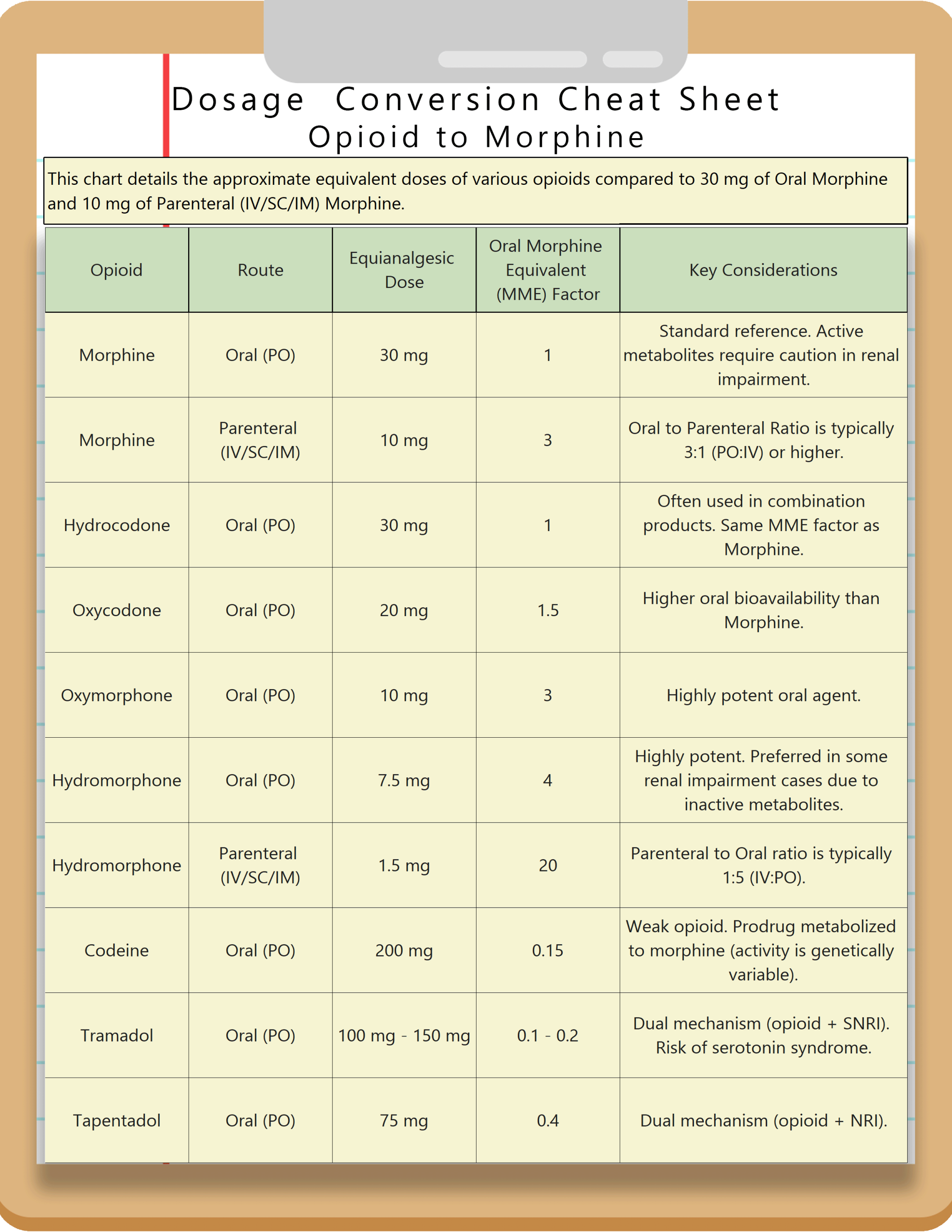
- Opioid to Morphine Conversion Cheat Sheet: A concise, quick-reference guide highlighting the potency differences between oral and parenteral (IV) routes:
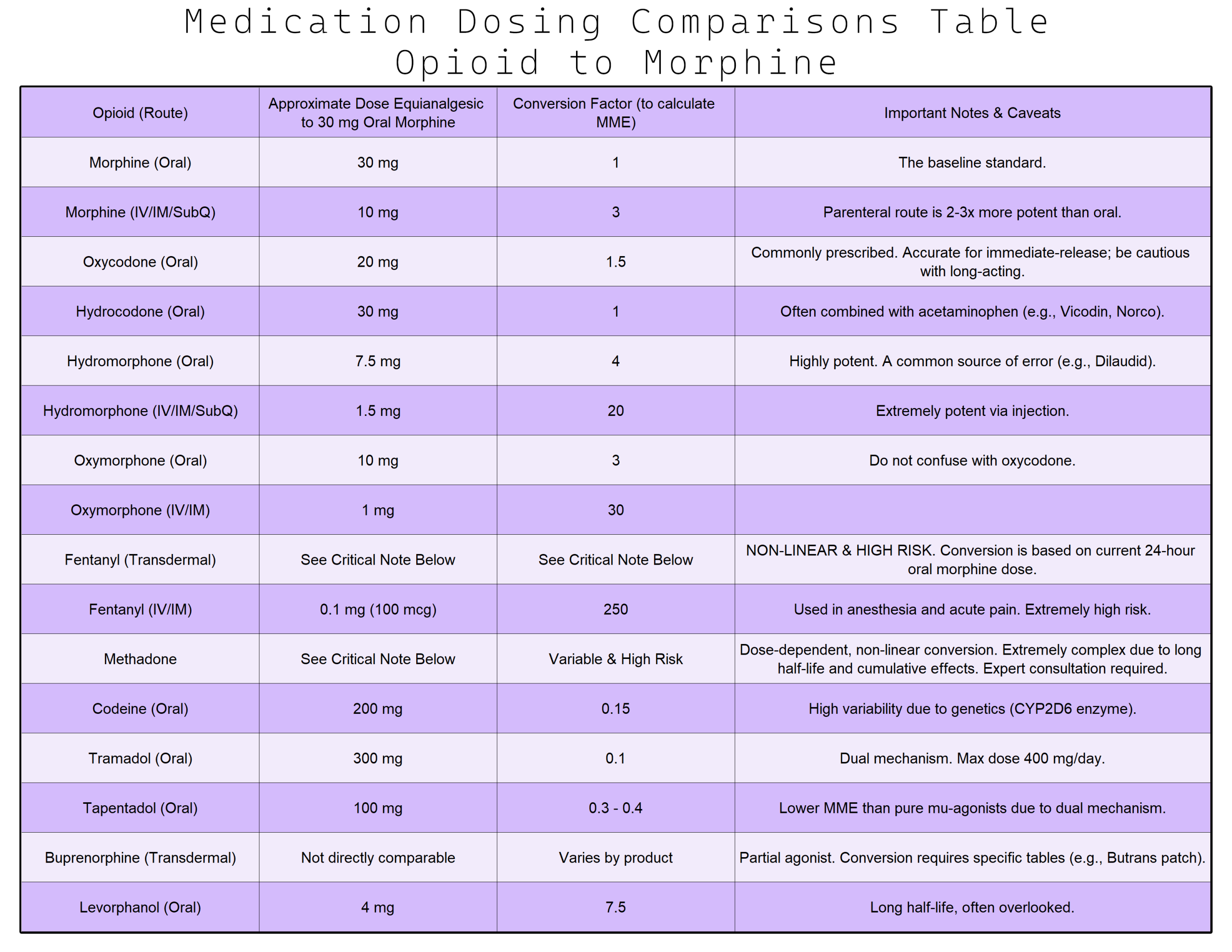
PDF – PNG - Opioid to Morphine Conversion Table: A detailed guide covering oral and IV doses, including complex medications like Fentanyl patches and Methadone:
PDF – PNG - Opioid to Morphine Conversion Chart: A clear, easy-to-read reference for calculating MME factors and approximate oral equivalents for common opioids:
PDF – PNG
Each chart presents commonly prescribed opioids with standardized equianalgesic doses, routes of administration, and morphine milligram equivalent factors. Clear labeling and structured tables facilitate rapid cross-checks, accurate calculations, and safer dose comparisons across various care settings. Having a printed or digital copy available helps reduce conversion errors and supports consistent clinical decision-making.
This chart is intended for educational and reference purposes only. Opioid conversions are approximate and must always be interpreted in a clinical context. Patient-specific factors, opioid tolerance, organ function, and professional judgment are critical. Any dosing change or opioid rotation should be performed by a licensed medical professional to ensure patient safety.



I’m a passionate designer with a keen eye for detail and a love for crafting visually stunning experiences. With a strong foundation in design tools like Adobe Photoshop, Illustrator, and Figma, I bring ideas to life through compelling visuals. My proficiency in HTML and CSS allows me to translate designs into functional, responsive websites. I’m always eager to learn and explore new design trends and excited to contribute my skills to innovative projects.